Fig. 1. One seed, from green to the drop · Providence, Profile 1.3
One coffee, at five moments.
Read it left to right. Green at the charge, yellow as it dries, into the heat of the drum, brown at first crack, and finished at the drop.†
Roast control
±1°
Target Agtron
64.2
Post-roast rest
48 hr
One seed. Four decisions.
the planwithin ±1° of itthe roastrate of rise
Before the roastColombia + Brazil, read by hand and by meter
In useMoisture meter, scale, sieves
Where it landed · Agtron, whole bean
64.2
darkerlighter
Precision in Perfection
I
Read the green.
Moisture, density, processing method and screen size tell us how the coffee is likely to accept heat.
By the senses
The seed in the hand first: its colour, its smell, how evenly it was sorted.†
By the instrument
Moisture10.7%
DensityLot-specific
ProcessWashed / Natural
Water held inside the green seed shapes how quickly heat moves inward and how much energy the roast needs.
With
Moisture meterreads the water held in the seed†
Scale and measurea set volume, weighed, gives density†
Screen sievessort the seed by size†
II
Design the curve.
The target cup becomes a starting profile: charge temperature, turning point, rate of rise and planned development.
By the senses
Every profile starts with the cup we want to share, then works backward through origin, process, density and roast curve.
By the instrument
Profile1.3
Roast control±1°
Planned development15.0%
Planned drop10:12
With
The roast logevery profile kept, numbered and revised; this one is 1.3†
The modeldrafts the next curve from every roast before it†
III
Roast with attention.
Sound, smell and color remain active signals. Sensors sharpen the picture without taking the roaster out of it.
By the senses
Charge. Green coffee meets the drum, and its roar drops as the load goes in.†
By the instrument
Stored heatSets the trajectory
Bean temperatureFalls to the turning point
With
Brass roasting drumstored heat, and coffee kept turning
Bean probebean temperature, and from it the rate of rise
Environment probethe air moving around the coffee
Sight glasscolour, watched as it changes
0:00–4:30
Drying.
Moisture releases. Green moves through yellow to cinnamon.
By the senses
Grass on the air, then hay, then something close to bread.†
By the instrument
Rate of risePeaks about two minutes in
ThenEases steadily to the drop
4:30–8:40
First crack.
Aromatics expand; pressure opens the coffee's structure.
By the senses
Listen for it. A dry, sharp popping from inside the drum.†
By the instrument
Against the planHeld within ±1°
StatusAromatic expansion
8:40–10:12
Development.
Sweetness, body and finish converge on the target cup.
By the senses
The colour deepens and the smell turns from toast toward caramel.†
By the instrument
Development15.0% of the roast
Drop10:12
IV
Cup, record, repeat.
Agtron, mass loss and sensory notes close the loop. Drift becomes visible and good decisions become repeatable.
By the senses
Cup first. Sweetness, balance, finish, and the actual drinking experience decide whether the profile works.
By the instrument
Agtron, whole bean64.2, target ±0.8
Mass lossBatch record
Rest48 hours
The rest is the starting window after roasting, when excess gas settles and extraction becomes more predictable.
With
Agtron colour readerroast colour, on whole bean and ground
Scalethe mass lost in the roast†
Cupping bowls and spoonthe final checkpoint
The roast logtakes the whole batch in, for the model to read†
A process that remembers.
The raven is observant, adaptive and unexpectedly capable. Data, sensors and AI serve that same instinct: notice more, remember better, adjust with care.
1
Every roast is logged.Bean temperature, rate of rise, the air in the drum, moisture, colour and the cupping notes, batch by batch.†
2
The log is read by a model.It sets the new roast beside every one before it, and shows where the curve drifted and what the cup said when it did.†
3
The model drafts the next curve.A little more heat early, a longer development: a revised profile, proposed for the next batch.†
4
The roaster decides.The model has the longer memory. The cup still has the last word.†
Fig. 2. Providence, four profiles. Each began from the log of the one before†
Precision is not the removal of instinct. It is how instinct learns to remember.
Old-world judgment. A process that remembers.
† A line written for this page, for the roaster to confirm or replace. Every figure on this page is an illustrative design-draft value, not a measurement from a real batch.
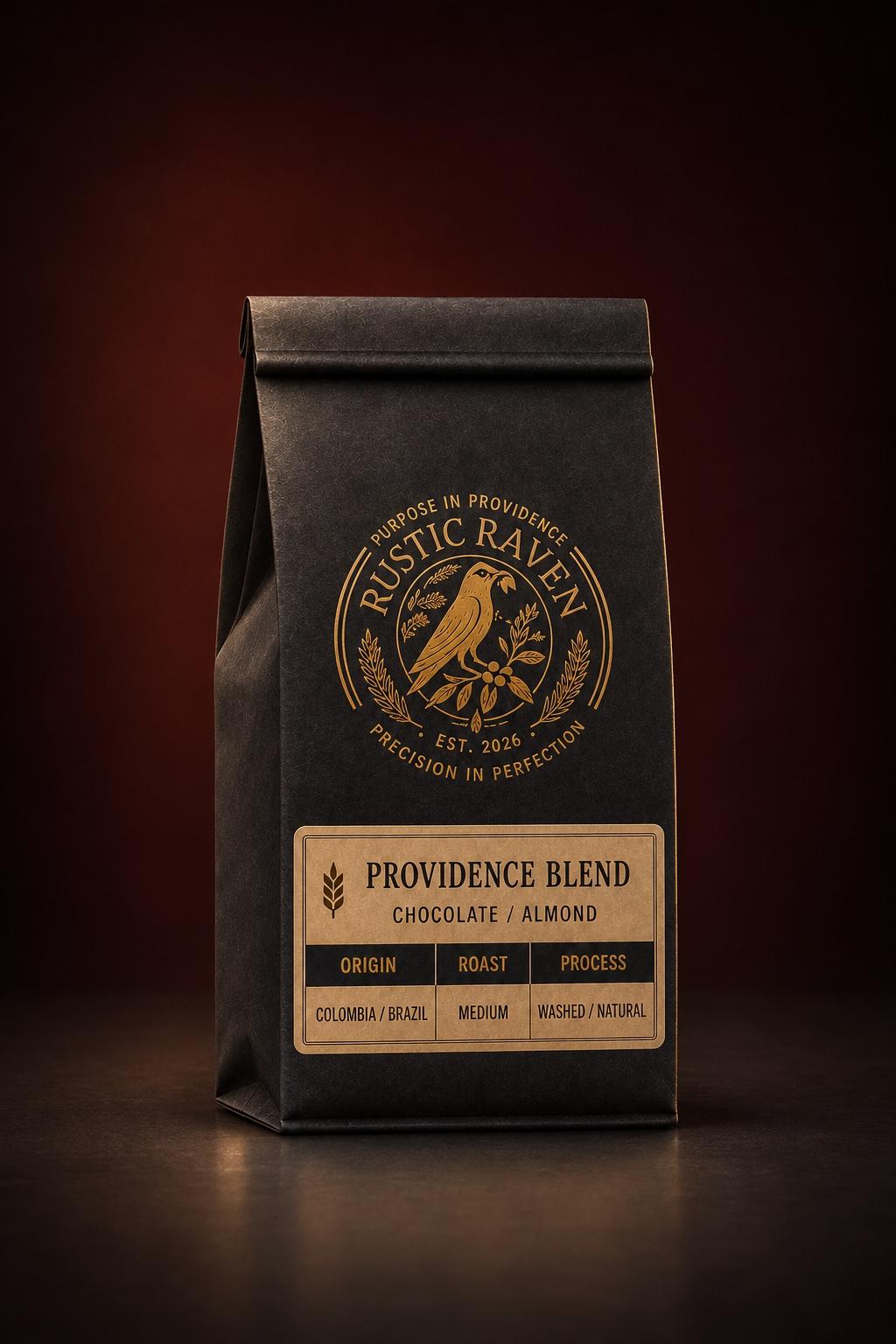
The coffee you just watched
Providence Blend.
Chocolate·Almond·Brown sugar
Rounded sweetness, a grounded body, and an easy finish. This is the dependable center of the first flight.
HK$138
House blend · 250 g. Shipping is worked out at checkout. Read the full plate
Next · The meaning
Why a raven carries the coffee seed.
The method explains how we work. The emblem explains why the work exists at all.